



Buying earthing and lightning protection for a project in Saudi Arabia? This guide covers which earth rod to pick, which copper tape size you need, which clamps fit, and what to send for a quote, so the whole system arrives right the first time.
اقرأ بالعربية: دليل شراء مواد التأريض والحماية من الصواعق
Start with the spec.
Before choosing a single part, pull four things out of the drawing or the consultant’s specification. They decide almost every line on the order.
The standard
Usually IEC / BS EN 62305 for lightning protection, BS EN 62561 for components, BS 7430 for earthing, IEEE 80 for substations and SBC 401 for buildings.
The target resistance
The earth resistance the system must reach. It sets how many rods, how deep, and whether you need plates or backfill.
The soil
Sand, rock, saline or made ground. It decides the rod material and how the rods go in.
The brand
Many specs name Furse, A.N. Wallis or an approved equivalent. Note it before you price anything.
Which earth rod for which soil?
Copper-bonded steel is the default for most jobs. Change it only when the ground or the structure next to it gives you a reason.
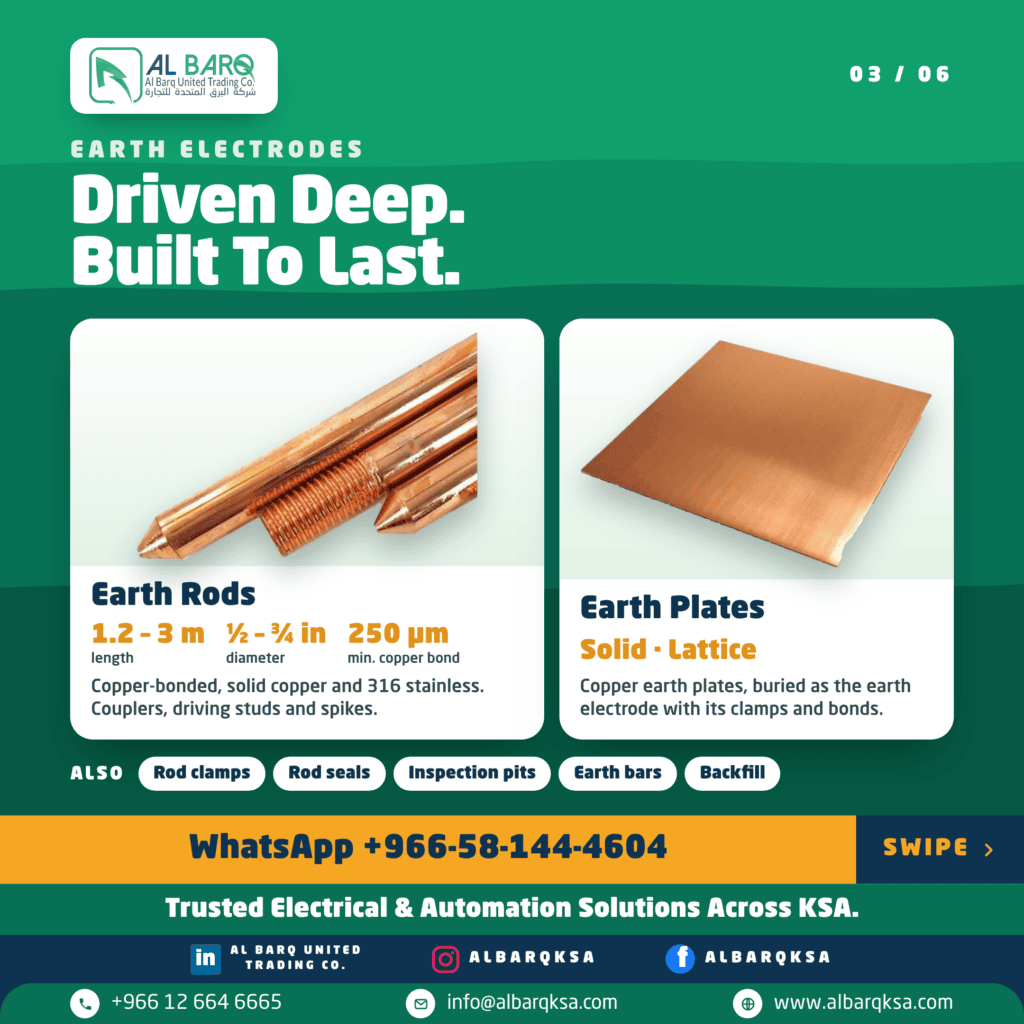
Copper-bonded
Normal sand and soil, buildings and substations.
Solid copper
Very corrosive ground, or where the spec asks for pure copper.
Stainless 316
Saline ground, or next to steel tanks, structures and pipelines.
Rock or very shallow ground? Use solid or lattice copper earth plates instead of rods. Check that copper-bonded rods carry at least 250 µm of copper, the figure BS EN 62561-2 calls for.
Copper tape sizes, and what each is for.
Tape is sold by width × thickness in millimetres. Multiply the two and you have the cross-section, which is what the standards and the fault-current calculation care about.
Size
Width × thickness
Cross-section
mm²
Typical use
Check your spec
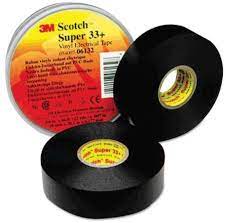
Bare copper tape is the default. Choose PVC covered (green and yellow), LSOH or lead covered where the run needs protecting. Need a size that isn’t listed? Send it with the quantity and we will confirm stock.
Copper or aluminium? Both, in the right place.
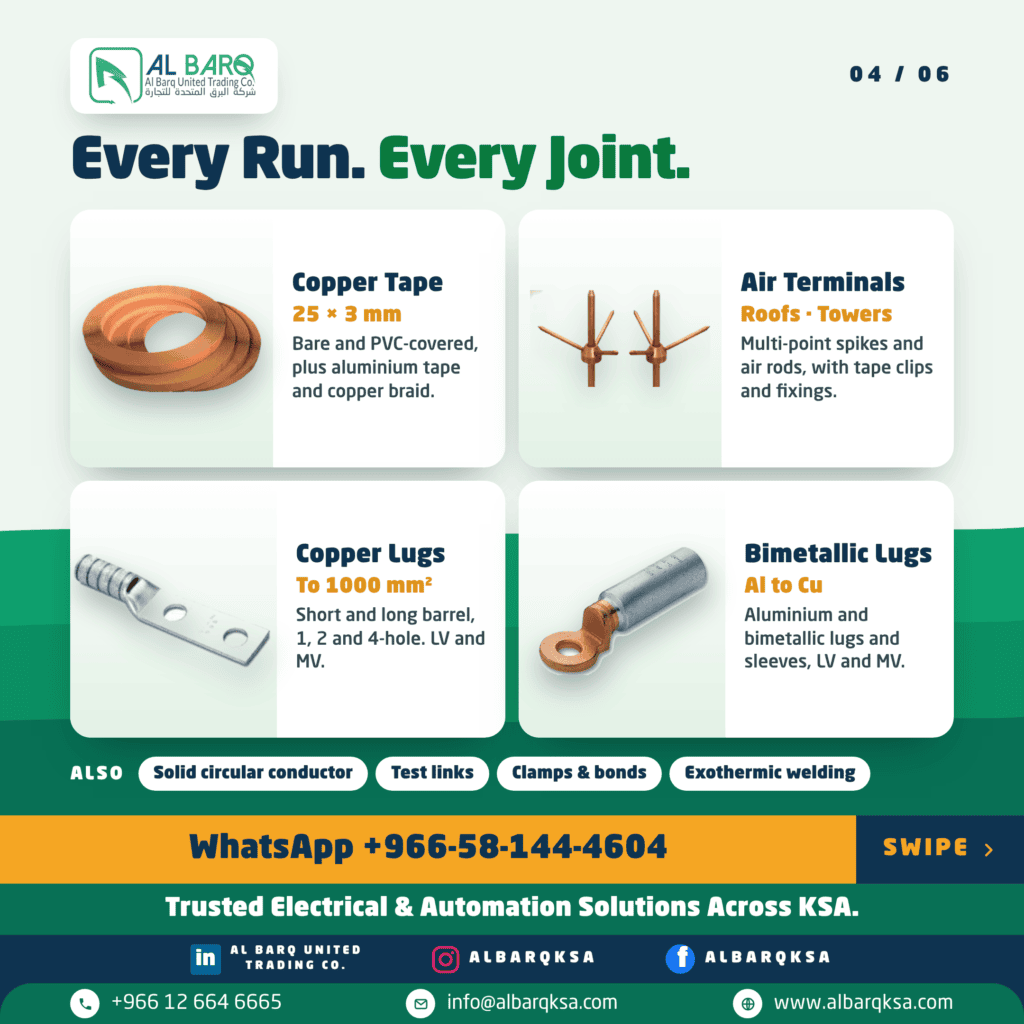
Aluminium is fine
Lighter and cheaper for long air termination and down conductor runs on the roof and walls.
Copper only
Anything touching soil or concrete, and all earthing and bonding, should be copper.
Use a bimetallic joint
Change from aluminium to copper at the test point. Never let the two metals touch directly.
Bimetallic cable lugs
Aluminium cable on a copper busbar needs a bimetallic lug, not a plain copper one.
How to reach a low earth resistance.
Dry sand and rock are common across Saudi Arabia, and they make low earth resistance hard to reach. If the first test comes back too high, these are the usual fixes, in order of cost.
Go deeper
Add couplers and drive the rod further, down to moister ground.
Add rods in parallel
Space them well apart, at least the length of a rod, and link them with tape.
Use backfill
Conductive earth electrode backfill around the rod lowers resistance in poor soil.
Add plates or a grid
Earth plates or a tape grid where rods cannot be driven.
Picking the right clamp.
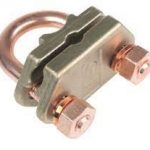
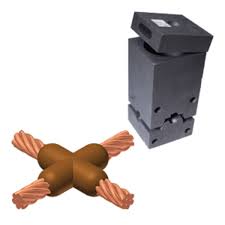
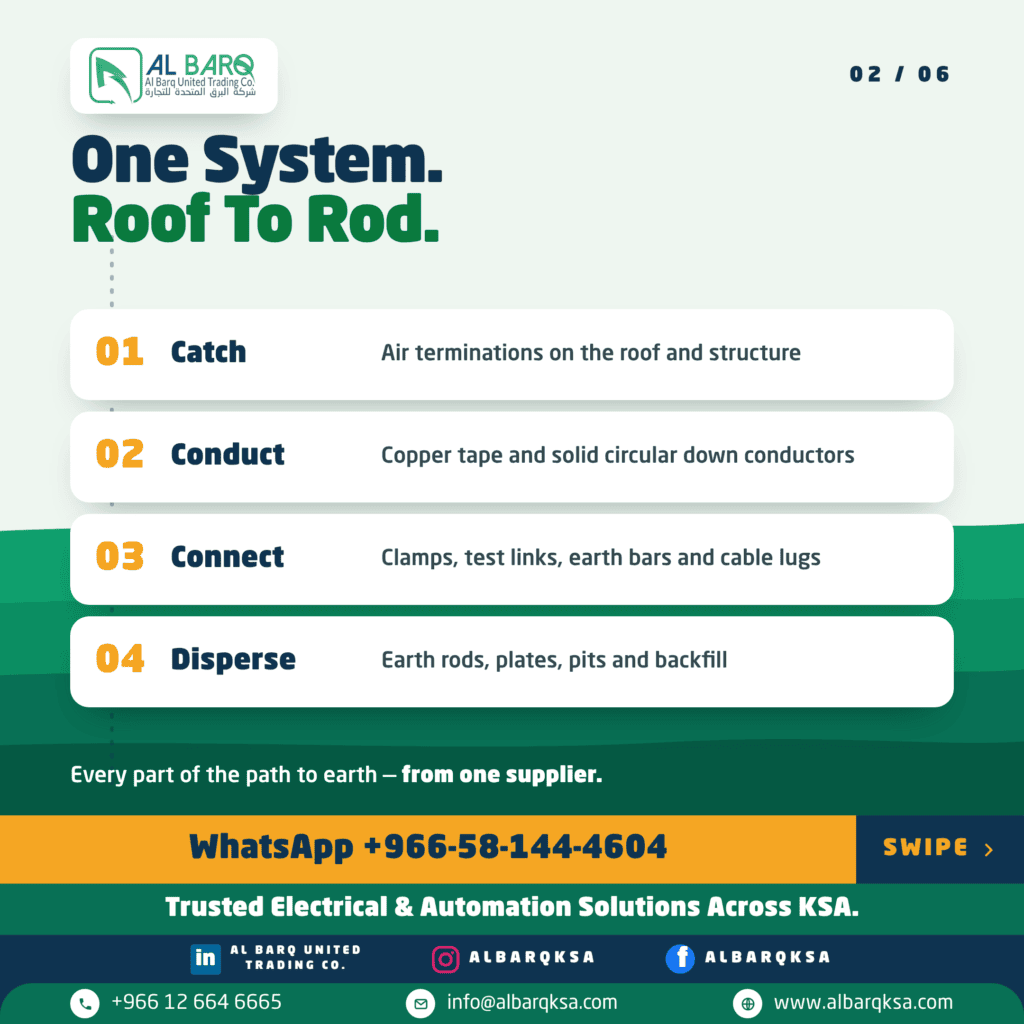
Rod clamps come in lettered types, such as Type A, B, E, G and GUV, each for a different joint: rod to tape, rod to cable, or a U-bolt for cable. You do not need to memorise them. Tell us the rod diameter, and the tape or cable size it connects to, and we will match the clamp. For joints that must never loosen, use exothermic welding instead.
What to order for a typical building.
A checklist so nothing holds up the install. Quantities come from your drawing.
Air rods or air terminals
With bases, plus copper or aluminium tape and DC tape clips for the roof mesh.
Down conductors
Tape and clips down each face, ending at a test clamp.
Earth rods and fittings
Rods, couplers, driving studs, rod clamps, and backfill if the soil is poor.
Inspection pits
One over each rod, polymer for light traffic, concrete for roads.
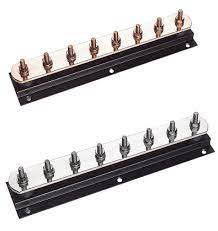
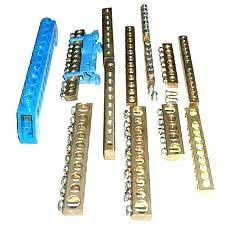
Main earth bar
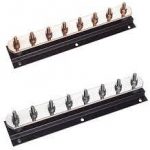
A copper earth bar with a disconnecting link, so the system can be tested.
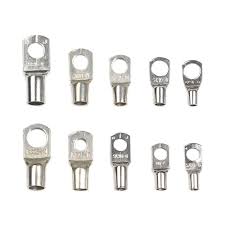
Bonds, welds and lugs
Bonds to services and steel, exothermic welds or clamps, and cable lugs at the panel.
Every item on this list is on our earthing and lightning protection supplier in Saudi Arabia page, with cable lugs and glands and exothermic welding moulds and powder on their own pages.
Buying by brand.
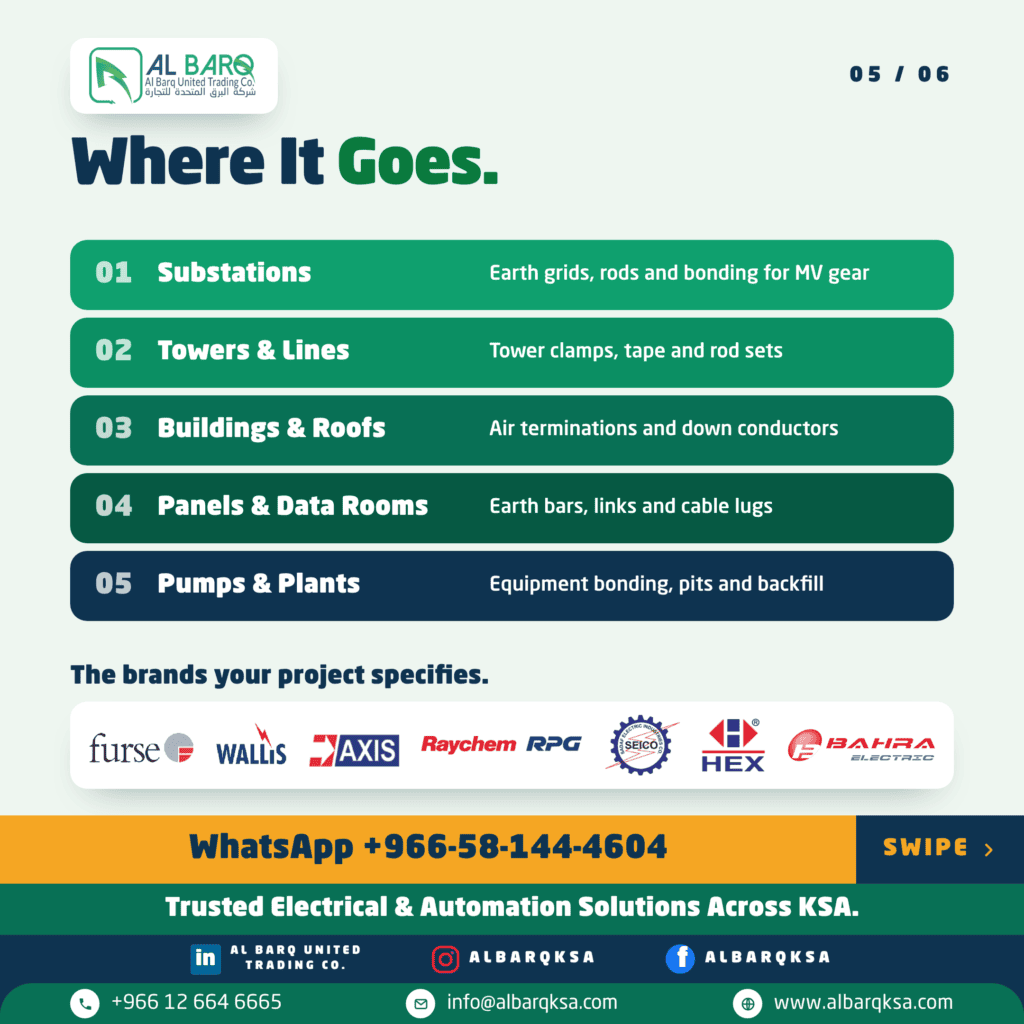
When the spec names a brand.
Quote the brand and part number exactly as written. If it is not available, ask for an approved equivalent in writing before you buy.
Questions, answered.
What size copper tape is used for down conductors?
25 × 3 mm copper tape, 75 mm², is the most common size for down conductors and air terminations on buildings. Always check the size your specification and lightning protection design call for.
What is the cross-section of 40 × 6 copper tape?
240 mm². Multiply width by thickness: 40 mm × 6 mm = 240 mm². It is used for main earth runs, substation grids and where fault current is high.
How deep should an earth rod be driven?
As deep as it takes to reach the target resistance. Rods are 1.2 to 3 m long and can be coupled together, so in dry ground they are often driven several lengths deep to reach moister soil.
How far apart should earth rods be?
As a rule of thumb, at least the length of one rod apart. Closer than that and they share the same soil, so adding rods lowers the resistance much less.
What does 250 µm mean on a copper-bonded earth rod?
It is the minimum thickness of the copper layer bonded to the steel core, 0.25 mm. BS EN 62561-2 sets it so the rod resists corrosion for its working life.
Can copper and aluminium tape be joined?
Not directly. Use a bimetallic joint, usually at the test point, so the aluminium above ground changes to copper before it reaches the earth.
How often should an earthing system be tested?
Commonly once a year, through the inspection pit and the disconnecting link at the earth bar. Your specification or the site’s maintenance plan sets the exact interval.
What should I send to get a quote for earthing materials?
Your drawing, specification or BOQ, the earth resistance you need to reach, any brand named in the spec, and where the material is going. WhatsApp +966 58 144 4604 or use the quote form.
Got the list? Send it over.
We match every line to your spec and price the whole system in one quote, delivered anywhere in Saudi Arabia.